Things to do in Tofino in winter — storm watching, epic Pacific surf, gray whale migrations, and cedar sauna evenings. Fewer crowds, better rates.
Why Winter Tofino is a Hidden Gem
Most people visit Tofino in summer — July and August — when the sun shines, the beaches are packed, and accommodation prices peak. But locals will tell you a secret: winter is one of the best times to visit.
From October through March, Tofino transforms. The crowds evaporate, prices drop significantly, the surfing hits its peak power, storms roll in from the open Pacific with cinematic drama, and the town's cosy, creative, community-driven character really comes out. It's a completely different — and often more authentic — experience of one of Canada's most special places.
Storm Watching
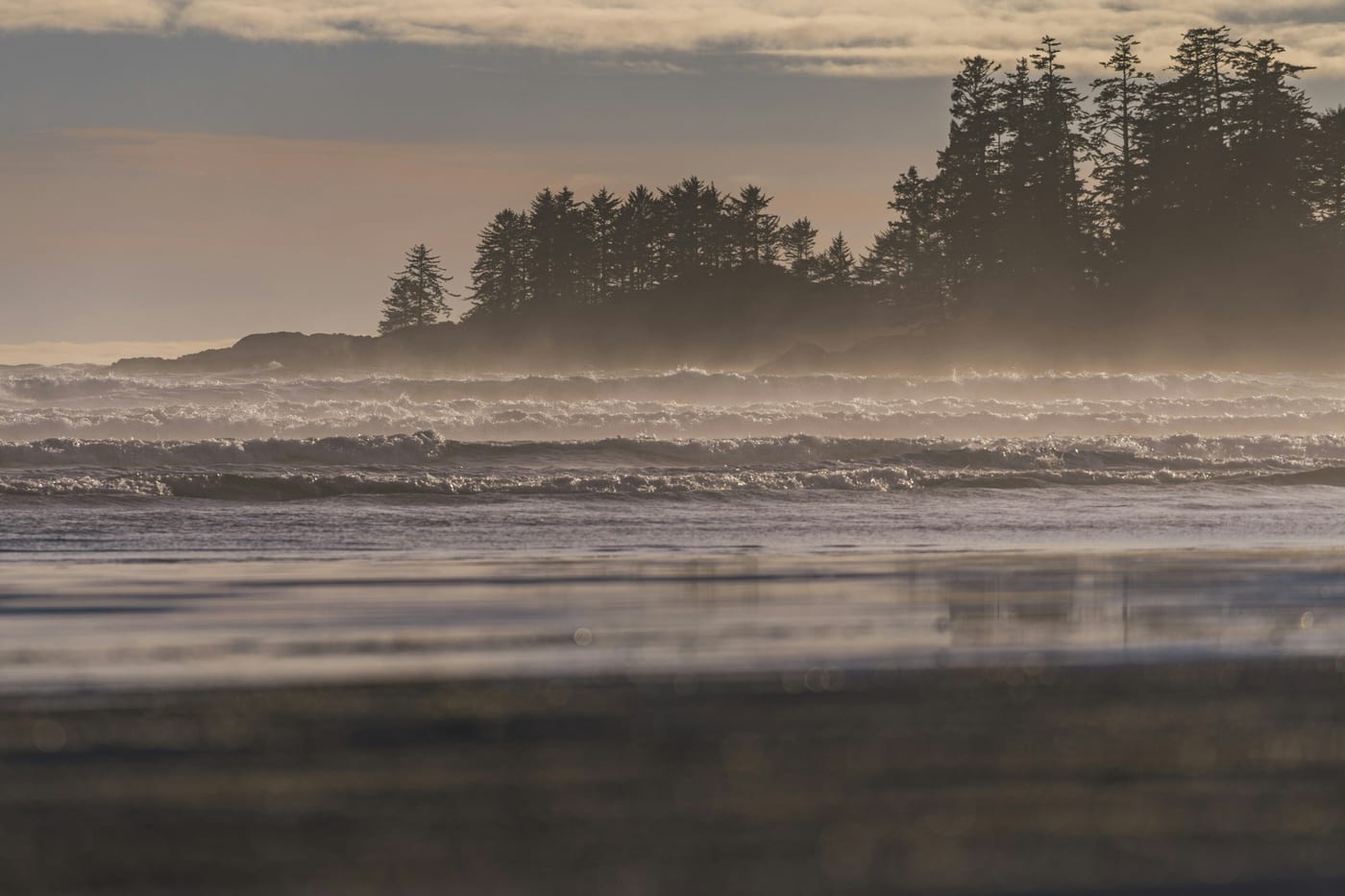
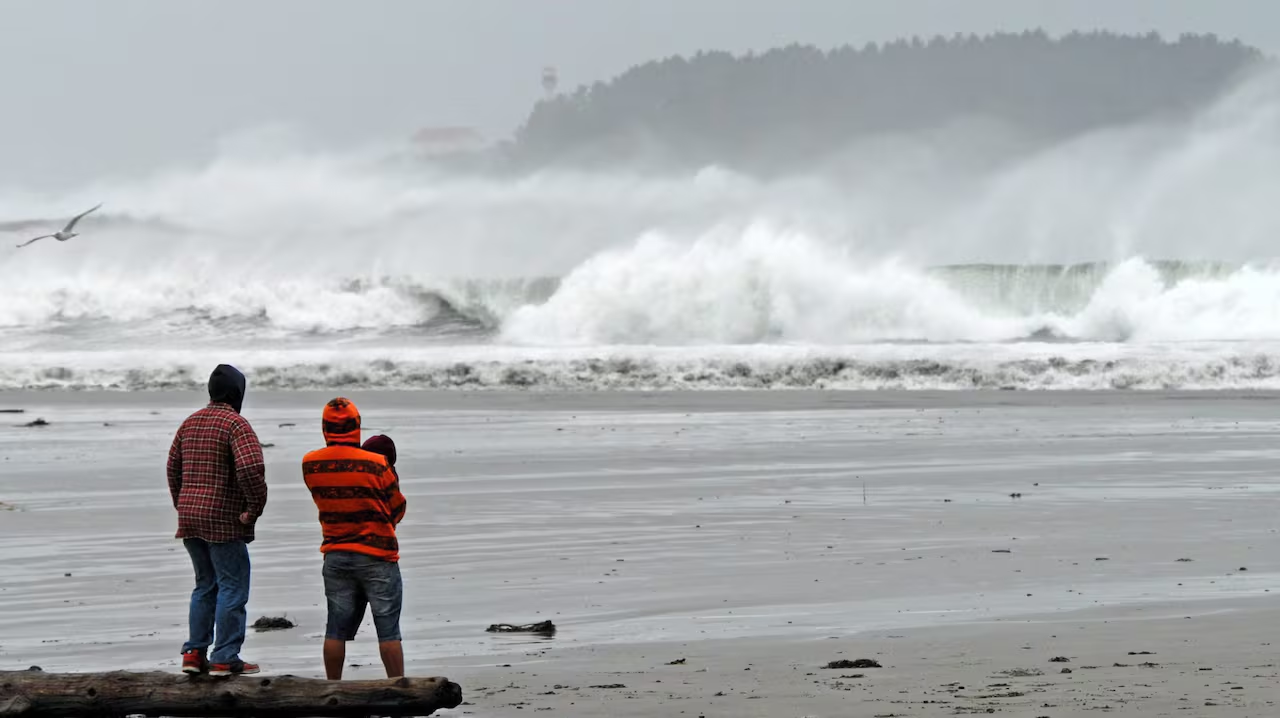
Tofino's storm watching season — November through February — draws visitors from across Canada specifically to watch violent Pacific tempests crash against the old-growth coast. Long Beach, Chesterman Beach, and the rocky headlands around Tofino Inlet offer front-row seats to waves that can reach 10 metres during the biggest swells.
There's something primal and deeply satisfying about watching this raw power from a warm, dry vantage point. And there's nothing better than returning to a hot cedar sauna and bubbling hot tub afterward — the ultimate contrast to the wild weather outside.
"Watching a Pacific storm roll in from Chesterman Beach in November is one of the most spectacular things I've ever seen. Nothing prepares you for the scale of it." — Nootka Tofino guest
Winter Surfing
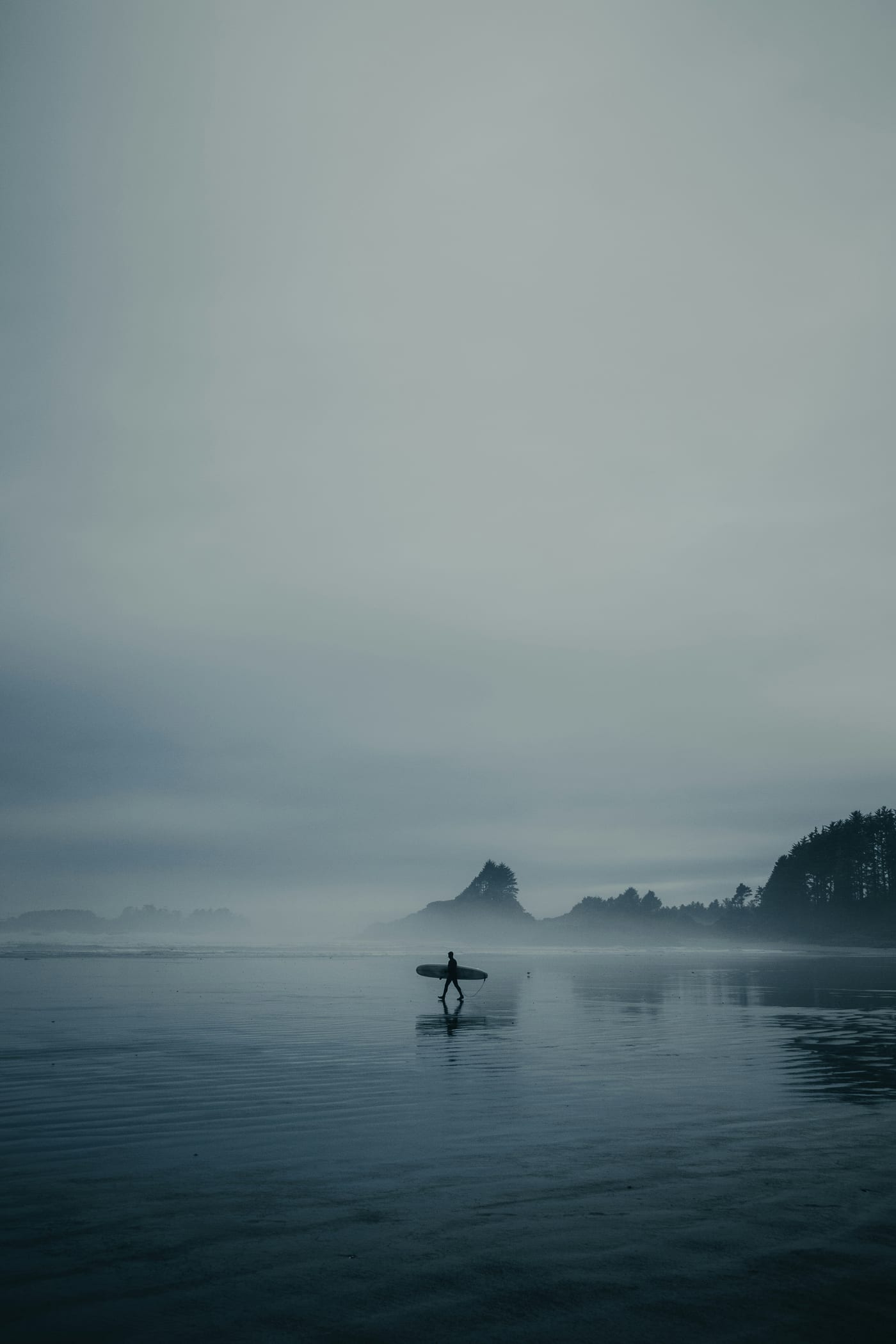
For experienced surfers, winter is the promised season. The North Pacific generates massive ground swells that produce powerful, hollow waves at Cox Bay and Chesterman. Water temperature hovers around 8–10°C, which means heavy wetsuit gear — but the waves more than reward the effort.
Even if you don't surf yourself, watching skilled locals tackle winter swells from the beach is spectacular entertainment. Cox Bay in particular produces some of the best barrels in Canada during big winter swells.
Gray Whale Migration
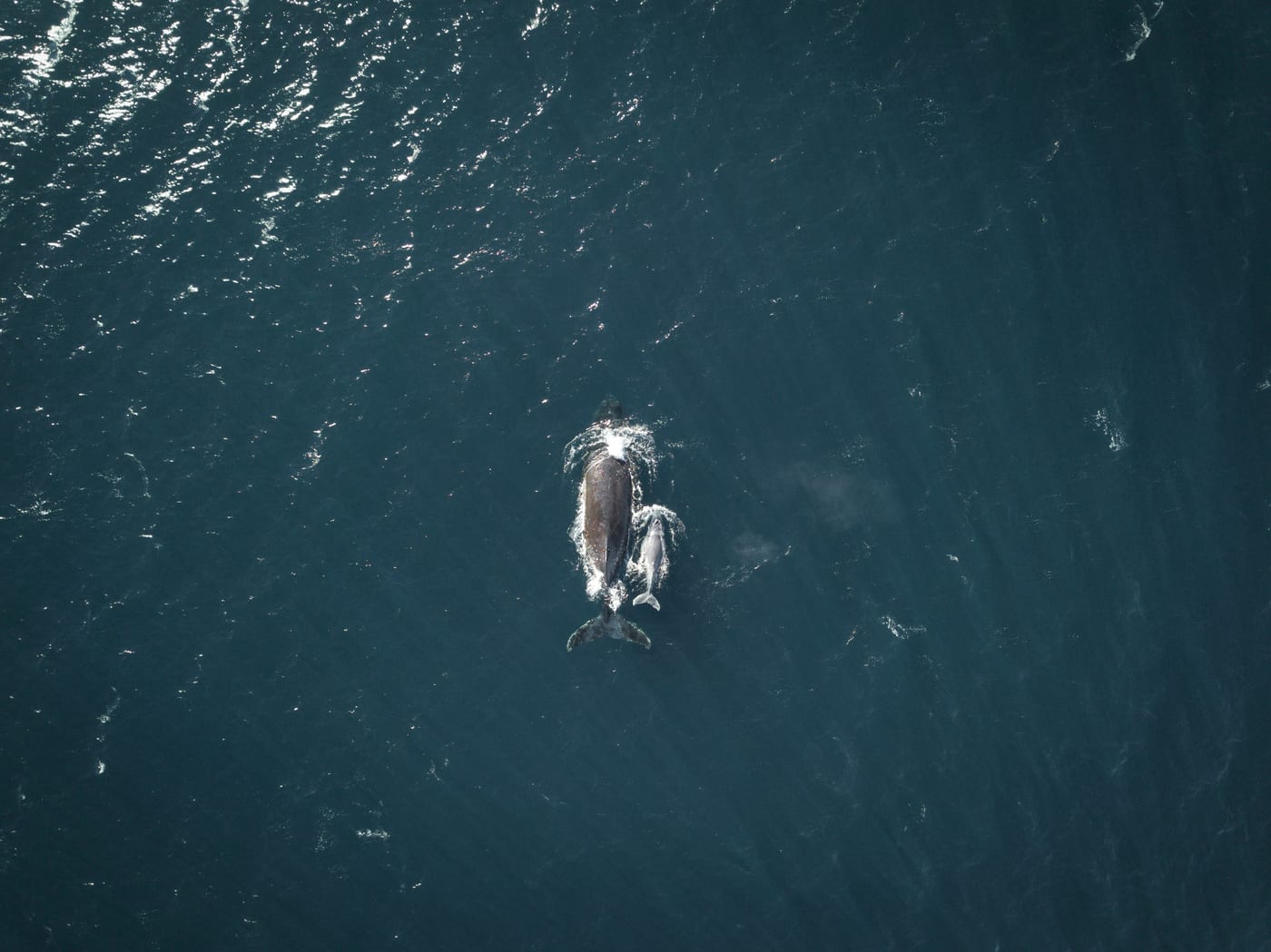
In March and April, approximately 20,000 Pacific gray whales migrate northward along the BC coast — one of the greatest wildlife migrations on Earth. The annual Pacific Rim Whale Festival in late March celebrates this spectacular event with guided whale watching tours, educational programs, and community events.
Multiple operators depart daily from Tofino Harbour throughout the migration season. Seeing a 40-tonne whale breach just offshore is an experience that stays with you for life.
Hiking in Winter
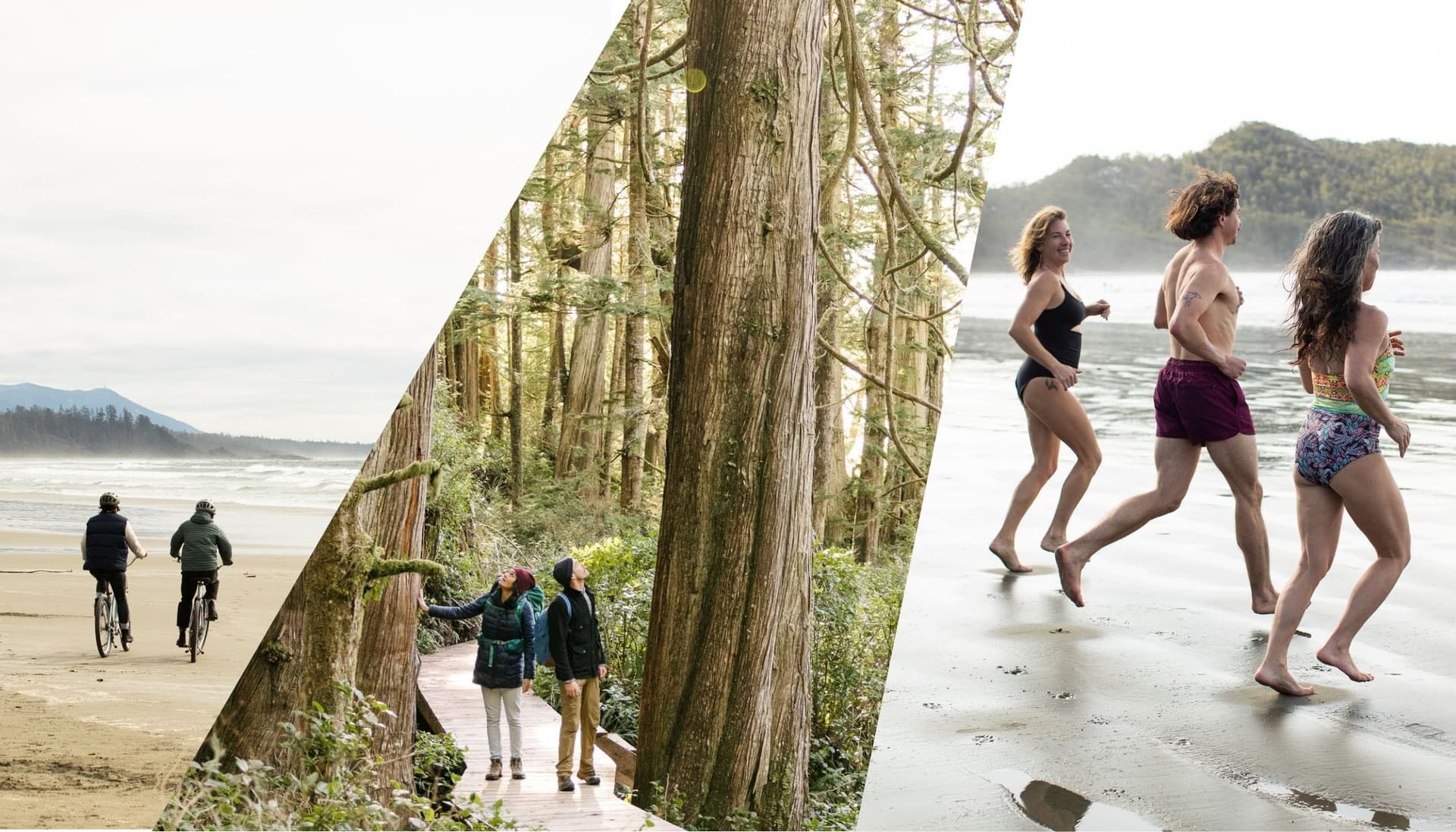
The trails around Tofino are at their most atmospheric in winter. The Rainforest Trail boardwalk through ancient Sitka spruce is otherworldly when shrouded in mist. The Tonquin Trail to Tonquin Beach is wild and quiet. Radar Hill offers dramatic panoramic views over stormy seas.
Dress for rain — waterproof layers are non-negotiable — but don't be put off. Pacific Northwest rain is part of the experience, and the misty old-growth forest is extraordinarily beautiful in winter light.
The Sauna & Hot Tub Experience
Cold, dramatic winter days followed by evenings in the cedar barrel sauna and hot tub at Nootka Tofino — this is peak Tofino winter living. Heat the sauna to 90°C, alternate with the steaming hot tub, and feel completely restored. There's genuinely nothing better after a day of storm watching, rain-soaked forest hiking, or a brisk winter surf session.
Tofino Winter Rates
Staying at Nootka Tofino in winter means enjoying all the same amenities — sauna, hot tub, full kitchen, the works — at our off-season rate of $750/night (3-night minimum). The property is fully heated and operational year-round, and the beach is yours to explore in all its dramatic winter glory, with far fewer people sharing it.
What to Pack for Tofino in Winter
- Waterproof rain jacket — non-negotiable, the best investment you'll make
- Waterproof boots or hiking boots with good grip
- Warm layers — base layer, fleece, down jacket
- Swimsuit for the sauna and hot tub
- Headlamp for evening beach walks (it gets dark early)
- A good book for stormy evenings by the fire
The ultimate Tofino winter base: Nootka House at Chesterman Beach — private cedar barrel sauna, outdoor hot tub, and steps from the best storm watching in BC. Book direct and save up to 14% vs. OTA platforms.